
Blind Land Speed Racing Journey
Blind Force Garage is building a bold new chapter in Australian land speed racing through determination, engineering, and trust in technology. At the centre of this journey is Gary, a blind driver taking on one of motorsport's most demanding challenges: driving a purpose-builtrace car across the vast salt at speed using skill, discipline, and an advanced electronic guidance system.
Venom
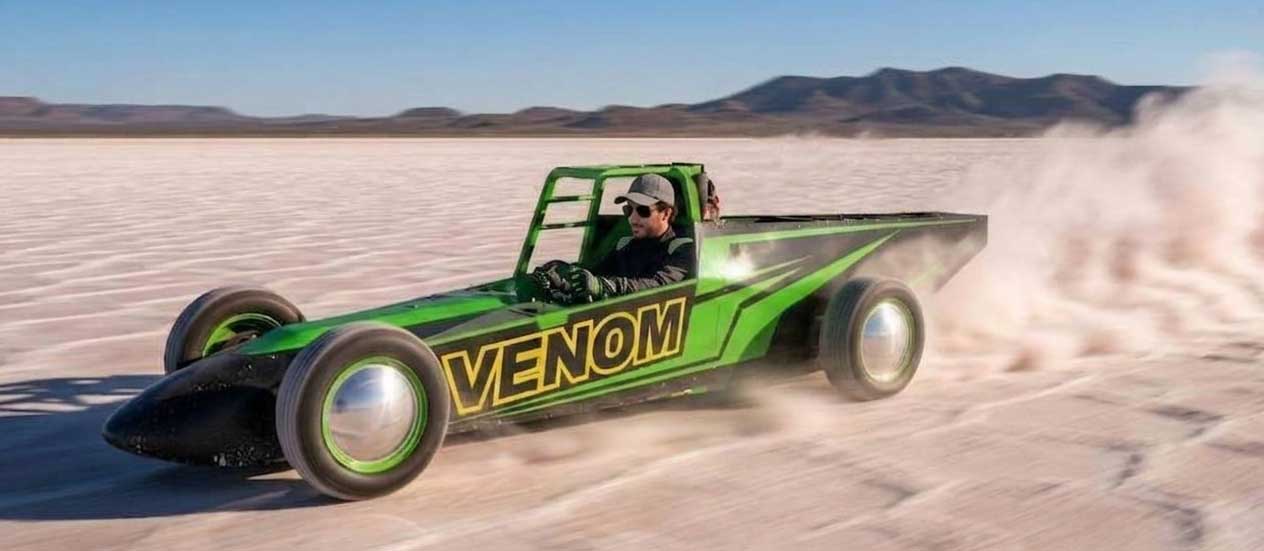
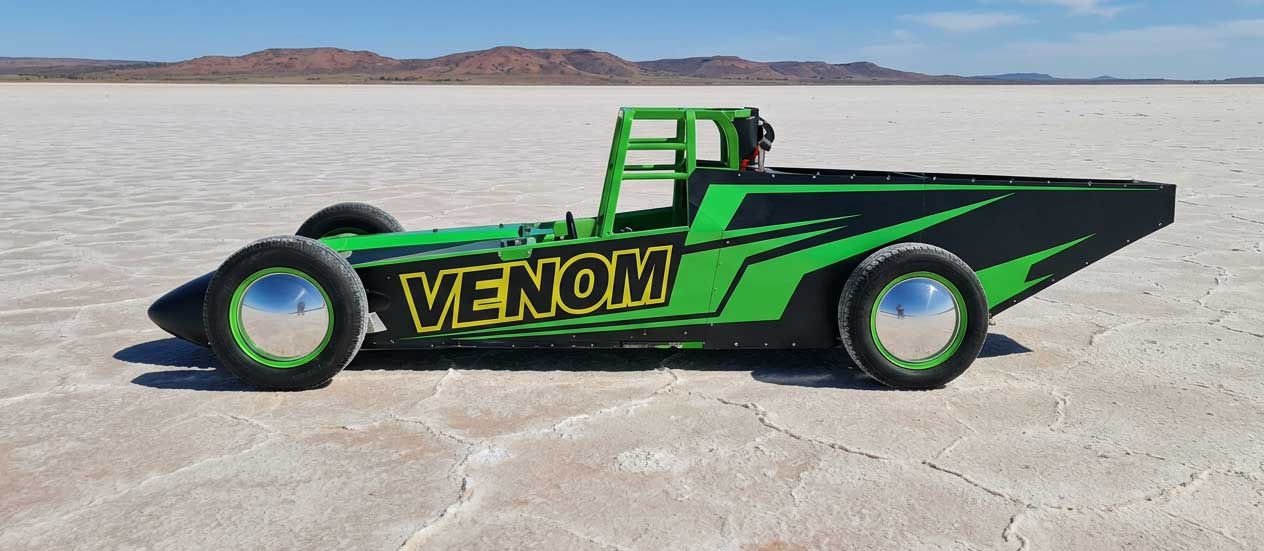
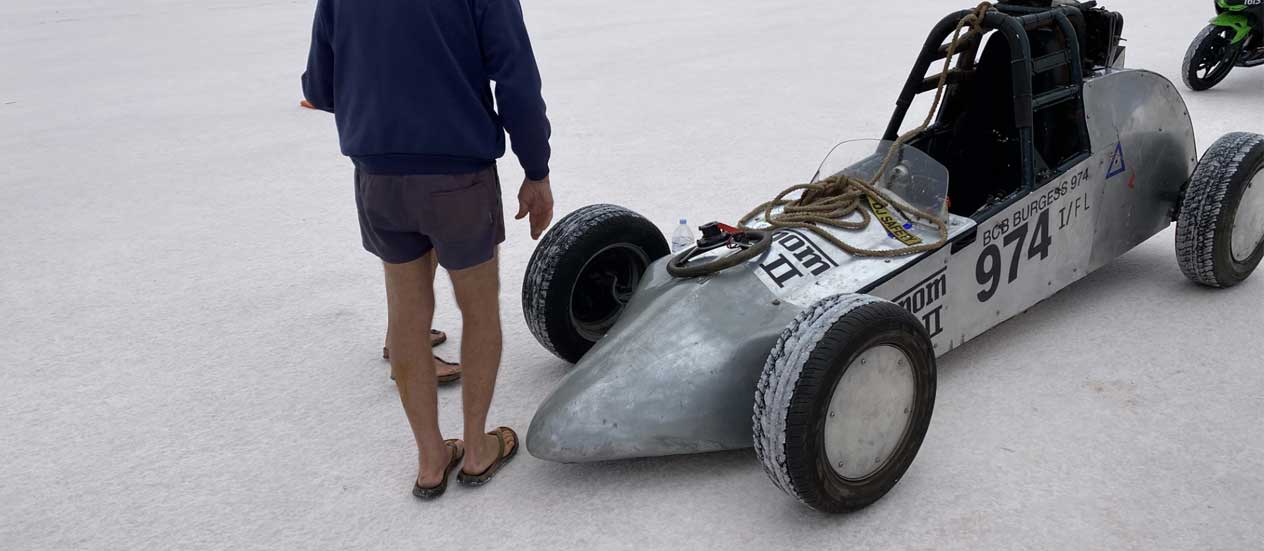
One of the key vehicles in the fleet is Venom, a purpose-built Lakester designed to cut cleanly through the air with minimal frontal area and reduced aerodynamic drag. The car measures 4.5metres in length and has a wheel track of 1.2 metres, giving it a narrow and highly focused racing profile.
Venom is powered by a Yamaha TRX parallel twin-cylinder motorcycle engine that has been extensively modified for competition use. Its engine package includes RS forged pistons, racecam shafts, and a nitrous oxide system that acts as a power adder to increase oxygen delivery, fuel burn, horsepower, and torque.
The current gearing in Venom gives a theoretical maximum speed of approximately 147 milesper hour. In practice, ultimate top speed will depend on available engine horsepower, torque delivery, traction, and the confidence required to drive precisely while relying entirely on non-visual guidance.
Venom's History
Venom was originally campaigned by the Burges family from Sydney. Bob and Penny Burges, together with their family, ran the car many times at Lake Gairdner, the famous dry salt lake inSouth Australia north of Adelaide.
The closest small community to the lake is Iron Knob, and the lake sits within the Mount Ive Station property. Lake Gairdner is a natural salt lake formed over millions of years and surrounded by striking ranges, creating one of the most unique motorsport environments in Australia.
Bob and Penny Burges later donated Venom, the land speed car, to Blind Force Garage. From that point, Stephen Clarke, Amanda Clarke, and Gary carried out a complete restoration and major modification program on the original Venom platform.
Restoration and Modification
A major part of the rebuild involved extending the body line by 1.2 metres. This modification was primarily completed to accommodate a full exhaust system and mufflers, helping toreduce noise levels inside and around the vehicle.
That change was essential because Gary races with an electronic guidance system that provides audio cues throughout the run. Clear, reliable sound is critical, as the guidance system must deliver accurate information into the helmet without interference from unnecessary engine and exhaust noise.
Venom is built around a hand made tubular frame using 44 millimetre outside diameter tubing with a 3 millimetre wall thickness to comply with the DLRA rule book. The car also carries additional ballast to reduce the risk of blow-over at speed and incorporates multiple aerodynamic corrections and control features to improve stability on the salt.
How the Guidance System Works
Gary is able to compete in land speed racing through the use of a digital electronic guidance system designed and engineered by Patrick Johnson from the United States. The system was originally developed for Dan Parker, the Guinness World Record holder recognised as the fastest blind man in a motor vehicle.
This guidance package is an extremely sophisticated combination of GPS, inertial measurement, and live telemetry. It constantly calculates the vehicle’s position on the course and sends data back to a control centre, where an operator can monitor the car’s location at all times.
The system does not drive the car. Gary controls the steering, throttle, clutch, and braking exactly as any sighted driver would, and there is no automated steering or driving input from the guidance package during the run.
Its role is to provide accurate audio guidance so Gary can stay aligned with an electronically defined centre line down the track. The only direct intervention available is an emergency shutdown function that can reduce engine power, and the operator can also deploy the parachute if a serious safety issue arises.
A further safety redundancy allows the control centre to activate an onboard torque reduction system that slows the car to little more than a fast walk. This backup exists in case of an electronic malfunction or another serious issue and provides an additional layer of protection during a run.

What Happens on a Run
At the start line, Gary wears a headset and microphone so he can communicate with the crew chief while final checks are completed. Strict pre-race protocols, safety checks, and system redundancies must all be confirmed before the course is declared clear and ready.
Once the run begins, the headset switches to the guidance signals that tell Gary how far he is from the imaginary electronic centre line. These audio cues provide very fine positional feedback throughout the run and allow him to keep the car on course across the marked three-mile track.
A push vehicle and pickup crew travel alongside the racetrack, but they do not maintain visual contact with the race car for most of the run. Gary remains the only person controlling the vehicle until the end of the pass, when he stops in the shutdown area and waits for instructions from the chase crew to exit the course safely.
This is the only point at which another person directly assists after the run is complete. During the pass itself, the vehicle is entirely driven by Gary, making the achievement a true driving performance rather than a remotely controlled exercise.
Gary's Perspective
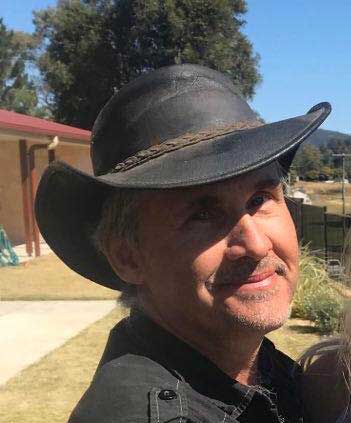
Many people ask, how fast am I going to go? That question cannot be answered directly.
How fast I go will depend on how well I can drive with no vision. I have driven many forms of motorsport in the past, including forest rally, off-road racing, and drag racing, but that was when I still had sight.
There is a completely different challenge in front of me now. I can calculate how fast the car can go mechanically, but I can never calculate how confident I will feel when I am alone in the car, completely blind, and fully aware that this is real. My first job is simple to describe and much harder to do. I have to get from point A, the startline, to point B, the finish line, while staying inside the corridor defined by the electronic guidance system.
That is by far the most daunting challenge. To answer the question honestly, I do not know how fast I will go until the run is over. It could be 5 miles per hour, or it could be the maximum speed the car is mechanically capable of achieving. Either way, it comes down to whether I can stay in the zone where concentration is everything. This is no longer like driving a car with normal visual reference points. It is vastly different when there are no visual cues at all and every steering input must be made from trust, discipline, sound, and feel.
More Than Speed
This journey is about far more than numbers on a timing slip. It is about resilience, teamwork, engineering, accessibility, and proving that barriers can be challenged with the right people, the right systems, and the right determination.
Blind land speed racing demands courage, preparation, and absolute commitment. Every run in Venom represents not only a motor sport goal, but also a powerful message about possibility, innovation, and the refusal to be defined by blindness.